We use cookies to make your experience better. To comply with the new e-Privacy directive, we need to ask for your consent to set the cookies. Learn more.

The history of the Zippo Manufacturing Company
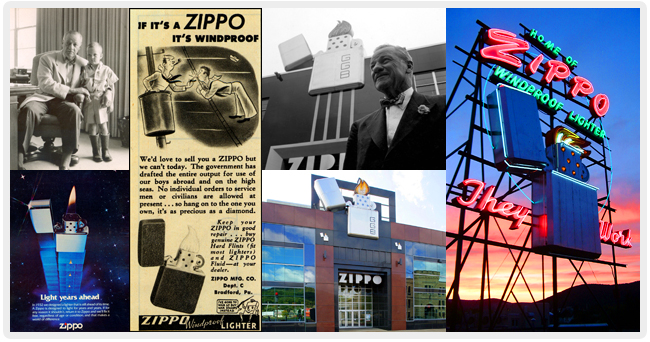
The story of Zippo Manufacturing Company is the story of the dedicated people, from its founder, George G. Blaisdell, to the many Zippo employees, customers and collectors who have played a role in its 80-year history. Their loyalty to Zippo has made it one of America's great companies, with a living history that is detailed here.
1930s
The Zippo timeline begins in the 1930s, at the Bradford Country Club in Bradford, Pennsylvania. Mr. Blaisdell witnessed a friend's awkward attempt to use a cumbersome Austrian lighter. The lighter worked well, even in the wind, due to the design of the fuse. But the lighter's appearance was impractical, its use required two hands, and the thin metal surface dented easily.
Late in 1932, he decided to redesign the Austrian lighter. Mr. Blaisdell made a rectangular lighter container and attached a hinge to the top of the lighter. He retained the design of the igniter, which protected the flame in unfavorable conditions. The result was an elegant lighter that was easy to operate. The first Zippo lighter, currently on display at the Zippo/Case Museum in Bradford, was produced in early 1933 and sold for $1.95 each. And, from the very beginning, they were backed by Mr. Blaisdell's unconditional lifetime guarantee - "It works or we fix it for free. ™ "The name 'Zippo' was created by Mr. Blaisdell. He liked the sound of the word "zipper", so he created different variations of the word and decided on "Zippo" because it sounded "modern".
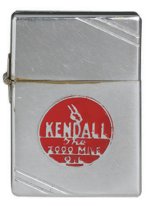
Application for the original Zippo patent was filed on May 17, 1934 and patent number 2,032,695 was granted on March 3, 1936. A second patent, number 2517191 was issued on August 1, 1950. The design of the Zippo lighter is basically the same to this day, though with some improvements. In the mid-30s, the Kendall Refining Company placed an order for 500 Zippo lighters. These are considered to be the first promotional lighters produced by Zippo and are coveted collectibles. Today, companies still use Zippo lighters as an advertising pillar and Zippo "logo" lighters remain among collectors' favorites.
World War II had a major impact on Zippo. Upon America's entry into the war, Zippo ceased production of lighters for consumer markets and dedicated all production to the US military. This military initiative led to the production of the Zippo steel lighter with black crackle finish. The fact that millions of US military personnel carried the lighter into battle was a significant catalyst in establishing Zippo as an American icon worldwide. Deliveries to the military market kept the factory fully booked and helped make Zippo a financially strong and viable company.
1940s
At the end of the war in 1945, Zippo focused on selling lighters to America in peacetime. As a born promoter, Blaisdell wanted to create a car that looked like a Zippo lighter. In 1947, the Zippo car was born.
1950s / 1960s
Starting in the mid-50s, date codes were stamped on the bottom of each Zippo lighter. The original purpose was for quality control, but the codes have since become an invaluable tool for collectors.
The launch of the "Slim" model in 1956 was an important milestone. This version is designed to appeal primarily to women. The first non-lighter product was a steel pocket tape measure launched in 1962. Other products have been launched and some removed from the Zippo product line since the 1960s. Many were primarily aimed at the advertising industry. These included keychains, pocket knives, golf products, pen-and-pencil sets and the ZipLight flashlight.
Perhaps one of the biggest influences on Zippo collectibles is the company's strong ties to Hollywood and Broadway. The Zippo lighter has been featured in more than 1,500 movies, plays and TV shows over the years. Zippo lighters have "starred" in productions as diverse as "I Love Lucy" "X-Men" and "Hairspray - The Musical". Often the lighter is an important prop used as a device to move the plot forward or to reflect the personality of a character or period.
On the music scene since the 1960s, Zippo lighters have been known as a tribute to favorite artists, later a gesture dubbed the "Zippo Moment". The famous Zippo "click" has been sampled on songs, and the lighters themselves have been featured on album covers, tattooed on rock singers, and participated in Rolling Stone photo shoots. With a rock resume like this, the Zippo Encore was created to showcase the talents of up and coming bands across the country.
1970s / 1980s
Founder Blaisdell died on October 3, 1978 He is remembered not only for inventing the Zippo lighter, but also for his generosity. After his death, his daughters, Harriett B. Wick and Sarah B. Dorn, inherited the company. In the 1980s and 90s, the company was owned by six members of the Blaisdell family, including his daughters and their children. Today, Blaisdell's grandson George B. Duke and Sarah Dorn are the son, sole owner and chairman of the board. Gregory W. Booth is president and CEO.
In the 70s and 80s, Zippo expanded its overseas sales and marketing activities. As a result, Zippo lighters are now sold in over 160 countries. Strong sales in both the domestic market and new markets abroad, especially China and India, have contributed to record sales increases in 2011 and 2012.
The 1990s
In 1993, Zippo acquired the WRCase and Sons Cutlery Company. Case manufactures high-quality handmade knives, offering a wide range of product categories, from traditional folding pocket knives and sporting knives to limited edition collectibles. Established in 1889 and based in Bradford since 1905, the Case company has a rich heritage and many enthusiasts collect both Case knives and Zippo lighters.
It's estimated that there are around four million Zippo collectors in the US and millions more around the world. Their zeal and dedication to the brand is unparalleled. To enhance the collector experience, Zippo clubs around the world come together for events throughout the year.
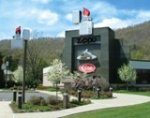
The Zippo/Case Museum opened in July 1997. The 15,000 square foot facility includes a retail store, museum and the famous Zippo workshop where Zippo lighter repairs are exhibited. The Zippo/Case museum was remodeled in early 2012 with textures like brick, metal, and leather; a wooden floor leading to a centrally located cash-lit pendant of drop lights that resemble fire; a combination of vintage art and lifestyle photography; and shelves that resemble the Zippo lighter base stamp.
2000 and onwards
In the fall of 2002, Zippo obtained trademark registration for the shape of the Zippo lighter. This was an important milestone in helping Zippo protect the brand from copying. Zippo also launched a major new product category Zippo MPL®, the multi-purpose lighter, a refillable gas lighter with multiple functions. Since then, several new products have been added to the multi-purpose lighter line.
Zippo storm lanterns have been a daily necessity for outdoor adventurers ever since. . . well, for more than 85 years. In the Zippo history books, there are many stories of how fire, heat or the Zippo box itself has saved the day or even saved a life. In 2010, the company introduced a reusable hand warmer that runs on Zippo lighter fluid and keeps hands warmer longer than any other hand warmer product on the market. In 2011, an Emergency Fire Starter Kit and a flexible neck storm lighter were added to the list of Zippo Outdoor products.
Zippo diversified product lines continue to grow and now include lighter accessories, fireplace and outdoor lighters, watches and even fragrance lines, as well as the constantly evolving line of heat and flame products for outdoor enthusiasts. Zippo also owns the Ronson brand of lighters and fuel for the North American market.
In 2012, during its 80th anniversary year, Zippo production reached a huge milestone with the production of lighter #500. The Zippo Lighter is rooted in both American and global culture. For marketing purposes, the brand has an instant recognition rate of more than 98 percent. This means that 98 out of every 100 people surveyed are familiar with the Zippo name and lighter without being helped in any way - an astounding recognition factor.
Today, when most products are "use and throw away" or covered by limited warranties, the Zippo lighter is still backed by its famous forever guarantee: "It works or we fix it free™". For more than 85 years, no one has ever spent a cent or penny to repair the mechanical parts of a Zippo lighter - regardless of the age or condition of the lighter.